History of Saint Ursula Church
|
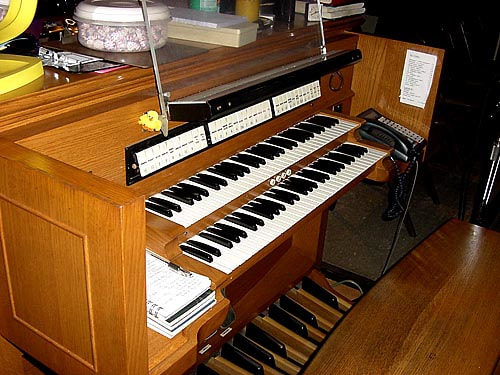
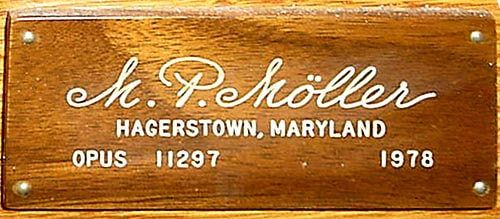
The Pipe Organ In 1977 a generous parishioner left money for the purchase of a pipe organ to replace the parish's aging electric organ. James M. Burns (organist/director of music 1977-1992) served as a consultant in the purchase of a small two manual 14 rank pipe organ built by M. P. Möller of Hagerstown, MD. Since this instrument had to fill a large space it was voiced very boldly to lead a full church in congregational singing of hymns and psalms. Hence quiet ranks of pipes were very limited in the design of the organ. "Opus 11,297" (the serial number of our organ) was also designed for the future addition of ranks of pipes and tubular chimes expanding it to three manuals with quiet and solo stops. The instrument was installed in 1978. |
Click here to learn about our stained glass windows
|
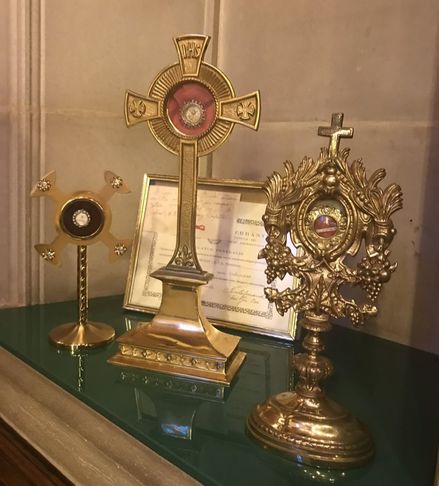
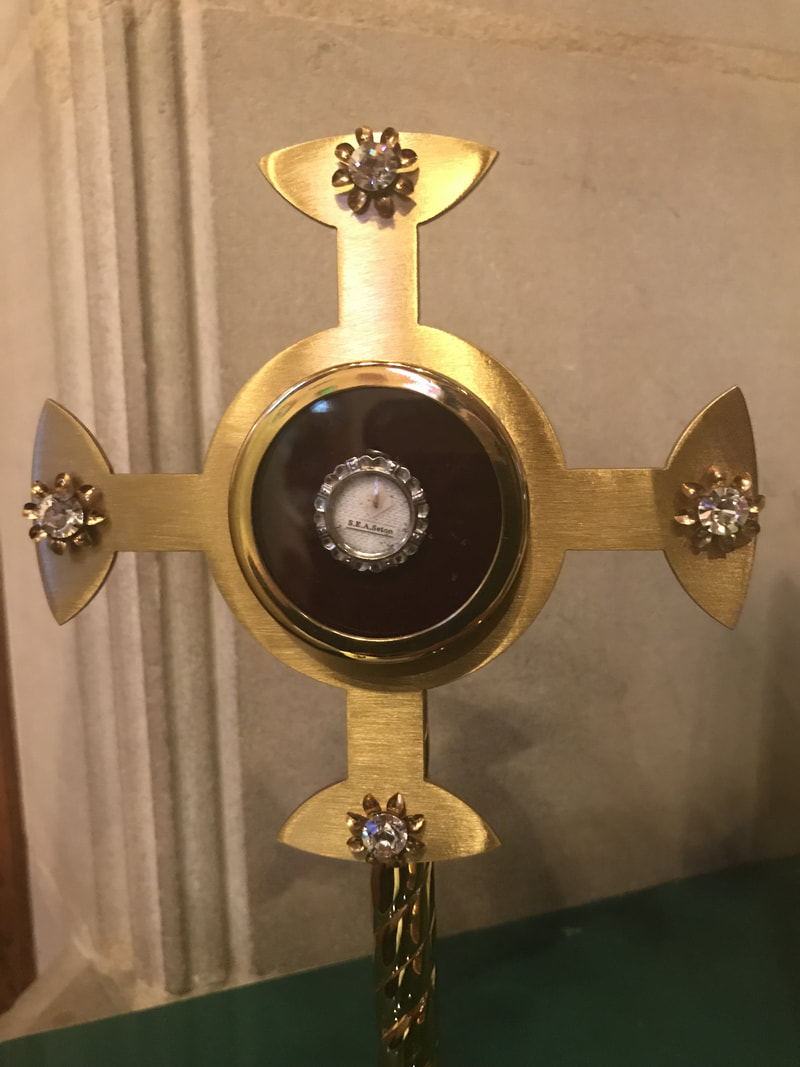
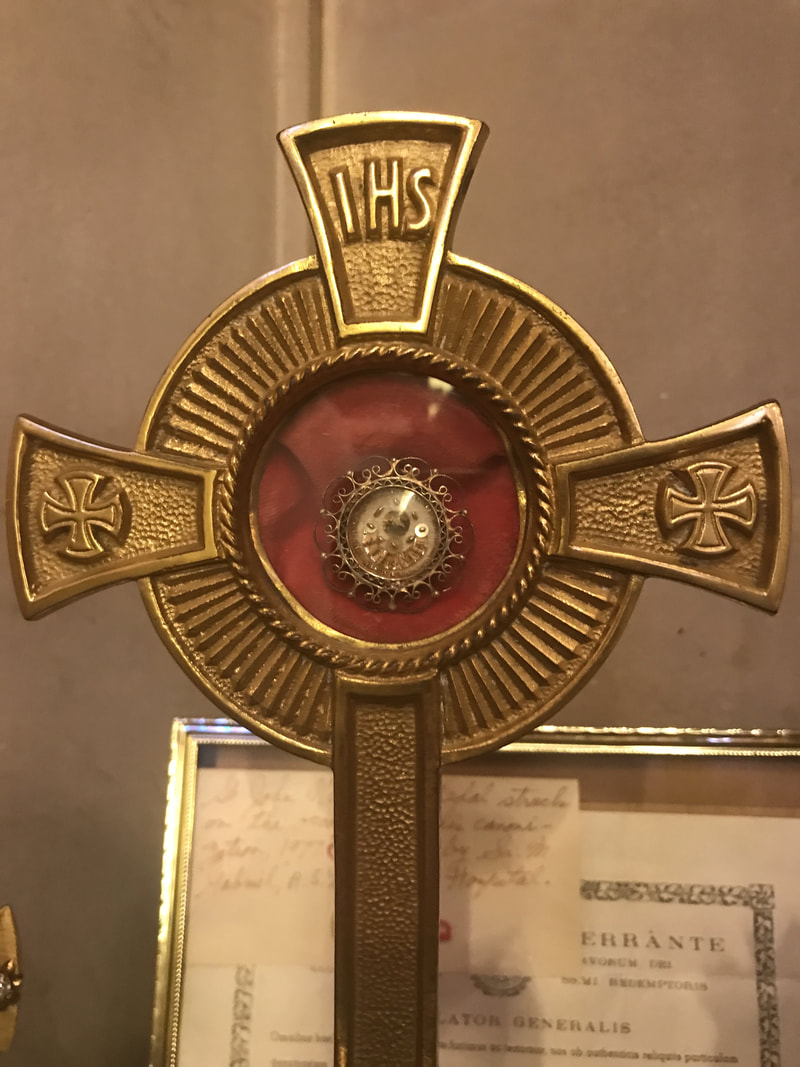
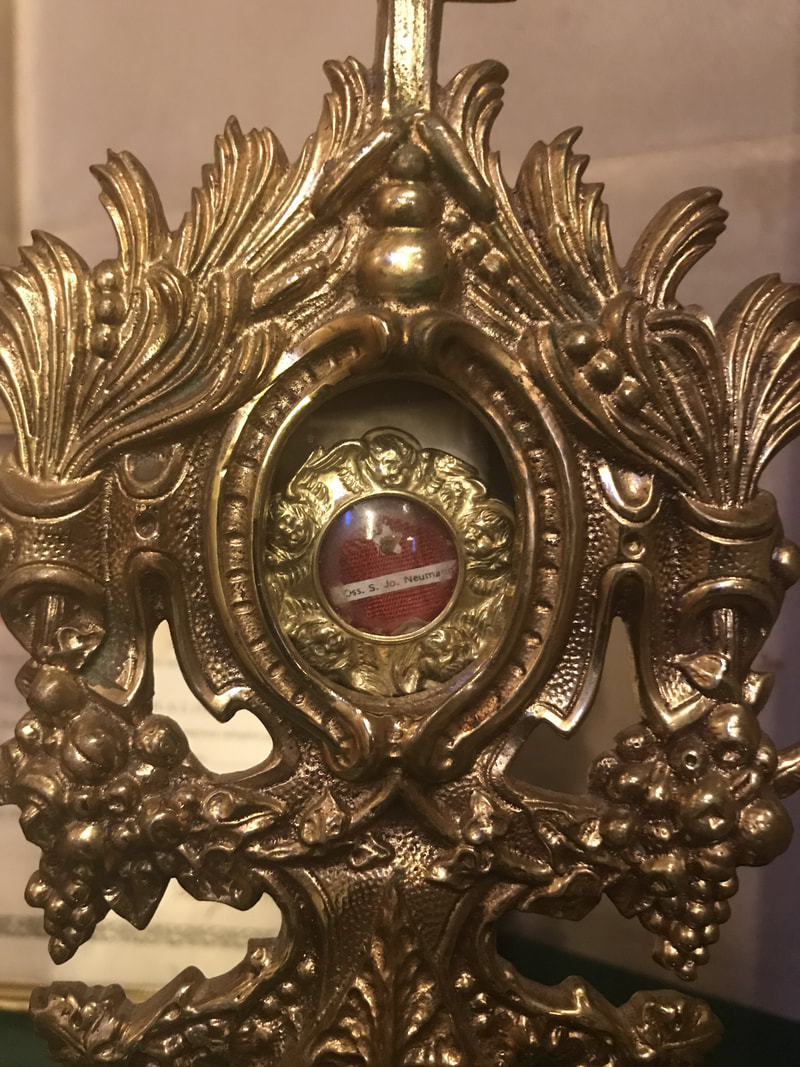
The Altar Relics Relics of saints are required to be in the consecrated altar when Mass is celebrated. The relics in the altar stone are those of St. Victorianne, Martyr, and those of other martyrs. We also have relics on display from St. Elizabeth Ann Seton, St. Francis Xavier, and St. John Neumann. |
|
|
( A History of the Pastors and Associates at St. Ursula Parish PASTORS BISHOP JOHN J. RUSSELL. D.D. 1937-45 (deceased) MSGR. WILLIAM J. SWEENEY 1946-67 (deceased) MSGR. MYLES J. MCGOWAN 1967-1987 (deceased) MSGR. A. THOMAS BAUMGARTNER 1988 to 2006 MSGR. JAMES P. FARMER 2006 to 2011 FR. STEPHEN HOOK 2011 to 2017 FR. JASON C. WORLEY 2018 to Present MISSION ASSOCIATES MSGR. EDWARD R. BRAHAM (deceased) MSGR. J. LEO MCCORMICK (deceased) ASSOCIATES MSGR. DAVID I. DORSCH 1939-49 (deceased) MSGR. WILLIAM F. DOYLE 1941-45 (deceased) MSGR. JAMES J. CRONIN 1945-64 (deceased) ARCHBISHOP PHILIP M. HANNON 1946 (deceased) MSGR. JOHN H. MCCALL 1949-50 (deceased) REV. THOMAS J. BYRD 1950-64 (deceased) REV. JOSEPH MARTELL 1961-68 (inactive) REV. PETER HILTZ 1964-66 (deceased) REV. REGIS F. LARKIN 1964-65 (deceased) REV. CLAUDE M. KINLEIN 1965-71 (deceased) REV. JOHN G. LINK 1965-69 (deceased) REV. ROBERT D. FRANK 1968-74 (inactive) REV. FREDERIC W. MAY 1968-70 (deceased) REV. WILLIAM Q. SIMMS 1971-78 (deceased) REV. WILLIAM P. FOLEY 1974-80 REV. RICHARD E. CHOMA 1978-81 (inactive) REV. THOMAS J. DONAGHY 1981-82 (retired) REV. FRANCIS J. LEFEVRE 1980-87 (inactive) REV. THOMAS RYAN 1982-86 REV. DAVID PIETROPAOLI 1983-84 (inactive) REV. GERALD HYNES, C.P. 1986-2014 (deceased) REV. FRANK J. BRAUER 1986-89 REV. GREGORY SMITH 1987-90 (deceased) REV. DONALD PARSON 1990-95 (deceased) REV. JAMES HANNON 1995-96 REV. ROBERT JONES, C.S.S.R. 1997-2000 (deceased) REV. PAUL HOLTHAUS 1998 to 2009 (deceased) REV. JOHN W. ROBBINS 2001 to 2005 (inactive) REV. MICHAEL DeASCANIS 2005 to 2009 REV. LAWRENCE ADAMCZYK 2009 to 2011 REV. EMMANUEL MENSAH 2009 to 2012 REV. STEPHEN COTTER 2012 to 2015 REV. STEPHEN D. GOSNELL 2016 to 2018 |
In the early part of the twentieth century, Parkville was a rapidly growing community. Like many areas on the outskirts of Baltimore, families were spreading outward and neighborhood services came with them. By 1894, Parkville had a blacksmith shop, three saloons, a hotel and a general store. Hiss Methodist Church had been established in 1839 and St. John Lutheran Church was founded in 1887. Catholics in the area attended St. Dominic Church in Hamilton by using the trolley that, according to Father Edward Braham, "lurched and swayed like a camel". To miss the trolley meant an intolerable wait. After giving the last blessing of the Mass, Father Manley was accustomed to warn his congregation to make a run for it, should they wish to catch the trolley for the country.
By the 1920's, Rev. John Manley, pastor of St. Dominic's, foresaw the burgeoning of suburbia, and on February 16, 1926, he purchased a piece of land on the west side of Harford Road near Manns Avenue from Abraham Niefeld for $6,500 to establish the mission church of St. Ursula. His assistant, Fr. Braham, undertook the task of raising the money for the property. As he began this endeavor, Fr. Braham found that the parishioners were not merely acquaintances, but true friends willing to assist his efforts for God and souls. With the people in the community, he ran a series of successful fundraisers, from Christmas card and bake sales to bridge parties, baby shows and suppers. When the debt was paid, then it was time for a church. Fr. Braham needed to raise an additional $10,000 to build a church. Again, there was a new round of socials and parties to raise money. Through the volunteer efforts of a few local men, a frame hall was constructed on the site. Children immediately began to prepare for their First Holy Communion and Confirmation. |
The First Building: A Church/School
On December 4, 1932, Fr. Manley broke ground for the first permanent building to be part of the church and the school. The church was dedicated on July 21, 1933, and Fr. Braham celebrated the first Mass in the new church the following Sunday. The St. Ursula Mission was finally a reality!
The mission developed quickly and on June 27, 1937, Fr. Manley released St. Ursula into the hands of its first pastor, Rev. John J. Russell (later Bishop Russell of the Diocese of Richmond, VA), and it became an independent parish. With a $9000 debt and no living quarters, Fr. Russell welcomed the volunteerism of the 700 Catholics of Parkville eager to make their parish a success. They enlarged the existing hall to more than double its size to accommodate the crowds that came to the chicken suppers and the bingo parties.
In April, 1940, Fr. Russell concluded an agreement for the erection and completion of an additional story to the school, and in September, 145 pupils attended the new school under the tutelage of the Sisters of Notre Dame de Namur. The sisters commuted from Ilchester that first year until a residence for them could be built.
The priests, too, needed a residence, and George Clautice donated a little more than three acres of property on the east side of Harford Road at Putty Hill Avenue. In 1941, Fr. Russell, now with two assistants, moved into the completed rectory. The parish continued to grow despite the war, and school enrollment increased. More sisters came to live in the convent. In 1945, Fr. Russell was honored with the title of Right Reverend Monsignor and in December, he was transferred to St. Patrick Church in Washington, D.C. After a brief stay there, he went on to become Bishop of Charleston, SC and later, Bishop of Richmond, VA.
New pastor Rev. William J. Sweeney needed to decide whether to continue plans to erect a new church or to enlarge the school, which already held 542 pupils - about 70 to each classroom. After much reflection, plans were drawn for the school and more fundraisers were held. The new building was blessed by Archbishop Keough before the 11 AM Mass on September 19, 1948.
Parkville continued to experience tremendous growth. By 1952, the number of pupils at St. Ursula had risen to 878. The convent was overcrowded with 14 sisters. The church and hall could not accommodate 3800 parishioners. Early in 1953, plans were drawn for building a convent and church at a cost of $750,000. On May 14, ground was broken for a new convent adjacent to the school at Neifeld Avenue.
A New Church
On the feast of Pentecost, ten days after ground was broken for the new convent, Fr. Sweeney broke ground for the new church. On the feast of St. Ursula, October 21, 1953, the pastor blessed the cornerstones for both buildings, and the convent was opened on December 8th.
Father Sweeney turned his attention to the new church. By September, 1954, the basement church was completed, and he said Mass there on September 26. The altar, crucifix, stations of the cross and statues had been brought from the original church, which was then converted into much needed classroom space. On October 20, Auxiliary Bishop Sebastian consecrated the altars in the upper church, and on October 31, the church was dedicated by Archbishop Keough.
Still the parish grew, and the school again became overcrowded. The now Monsignor Sweeney broke ground for an eight room addition in March, 1959 and the new building was occupied by students on September 3 of that year. By 1962, enrollment swelled to 1,468 students. In 1968, a new auditorium with kitchen, meeting rooms and offices was added.
Monsignor Sweeney did not live to see the completion of the construction. After nine years of heart ailments, he suffered a fatal heart attack on May 12, 1967, and died while en route by ambulance to St. Joseph Hospital. He had served as pastor for 22 years.
On December 4, 1932, Fr. Manley broke ground for the first permanent building to be part of the church and the school. The church was dedicated on July 21, 1933, and Fr. Braham celebrated the first Mass in the new church the following Sunday. The St. Ursula Mission was finally a reality!
The mission developed quickly and on June 27, 1937, Fr. Manley released St. Ursula into the hands of its first pastor, Rev. John J. Russell (later Bishop Russell of the Diocese of Richmond, VA), and it became an independent parish. With a $9000 debt and no living quarters, Fr. Russell welcomed the volunteerism of the 700 Catholics of Parkville eager to make their parish a success. They enlarged the existing hall to more than double its size to accommodate the crowds that came to the chicken suppers and the bingo parties.
In April, 1940, Fr. Russell concluded an agreement for the erection and completion of an additional story to the school, and in September, 145 pupils attended the new school under the tutelage of the Sisters of Notre Dame de Namur. The sisters commuted from Ilchester that first year until a residence for them could be built.
The priests, too, needed a residence, and George Clautice donated a little more than three acres of property on the east side of Harford Road at Putty Hill Avenue. In 1941, Fr. Russell, now with two assistants, moved into the completed rectory. The parish continued to grow despite the war, and school enrollment increased. More sisters came to live in the convent. In 1945, Fr. Russell was honored with the title of Right Reverend Monsignor and in December, he was transferred to St. Patrick Church in Washington, D.C. After a brief stay there, he went on to become Bishop of Charleston, SC and later, Bishop of Richmond, VA.
New pastor Rev. William J. Sweeney needed to decide whether to continue plans to erect a new church or to enlarge the school, which already held 542 pupils - about 70 to each classroom. After much reflection, plans were drawn for the school and more fundraisers were held. The new building was blessed by Archbishop Keough before the 11 AM Mass on September 19, 1948.
Parkville continued to experience tremendous growth. By 1952, the number of pupils at St. Ursula had risen to 878. The convent was overcrowded with 14 sisters. The church and hall could not accommodate 3800 parishioners. Early in 1953, plans were drawn for building a convent and church at a cost of $750,000. On May 14, ground was broken for a new convent adjacent to the school at Neifeld Avenue.
A New Church
On the feast of Pentecost, ten days after ground was broken for the new convent, Fr. Sweeney broke ground for the new church. On the feast of St. Ursula, October 21, 1953, the pastor blessed the cornerstones for both buildings, and the convent was opened on December 8th.
Father Sweeney turned his attention to the new church. By September, 1954, the basement church was completed, and he said Mass there on September 26. The altar, crucifix, stations of the cross and statues had been brought from the original church, which was then converted into much needed classroom space. On October 20, Auxiliary Bishop Sebastian consecrated the altars in the upper church, and on October 31, the church was dedicated by Archbishop Keough.
Still the parish grew, and the school again became overcrowded. The now Monsignor Sweeney broke ground for an eight room addition in March, 1959 and the new building was occupied by students on September 3 of that year. By 1962, enrollment swelled to 1,468 students. In 1968, a new auditorium with kitchen, meeting rooms and offices was added.
Monsignor Sweeney did not live to see the completion of the construction. After nine years of heart ailments, he suffered a fatal heart attack on May 12, 1967, and died while en route by ambulance to St. Joseph Hospital. He had served as pastor for 22 years.
Msgr. McGowan Years
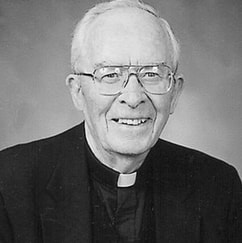
Fr. Myles McGowan, then pastor of St. Louis Church, Clarksville, was named by Cardinal Sheehan as the new pastor. When he arrived in June, 1967, St. Ursula was at a critical point. The parish had become so large that a twelve acre site for a new parish had been purchased on Old Harford Road north of Joppa Road. It would become St. Ursula's mission, later the parish of St. Isaac Jogues. With 2,500 families and 10,000 parishoners, St. Ursula was one of the largest in the Archdiocese. Fr. McGowan undertook the needed improvements to the parish and set about to eliminate the accrued parish debt. By 1973, half the debt was retired and in 1974, an innovative debenture plan was instituted that eliminated the remaining debt and saved the parish $35,000 per year. Yet, none of this would have been possible without the generosity and cooperation of the faithful parishoners. Spiritually, St. Ursula became a microcosm of the new vision of the Church that was set forth by the Second Vatican Council. Nearly 600 children were enrolled in CCD classes taught by volunteers. A preschool program began in 1972, as did the Summer Bible School. Adult education programs were conducted regularly. Most significantly, the laity took a more active role in the new liturgy. Lectors read the scriptures, cantors lead the congregation in song. Special Ministers distribute the Eucharist at Mass and Pastoral Outreach volunteers bring the Eucharist and comfort to the sick, the elderly and shut-ins. Several men in the parish completed studies to fill the role of Permanent Deacon. The new Mass in English with the celebrant facing the congregation made the liturgy meaningful to the people, who saw the changes as progressive and relevant. |
Msgr. Baumgartner Years
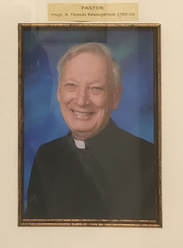
In 1987, Monsignor McGowan retired as pastor of St. Ursula with the title Pastor Emeritus. In February, 1988, Rev. A. Thomas Baumgartner became pastor, leading the parish into the 1990's and the 21st Century. Monsignor Baumgartner and his staff continued to serve an active, vibrant parish. Amidst changing demographics and changing needs, St. Ursula continued to live its mission with strength and purpose with an eye to the future in the 21st Century. The School maintaind enrollments between 730 and 750 students and many of her graduates received scholarships and endowments for high school and college. |
Msgr. Farmer Years
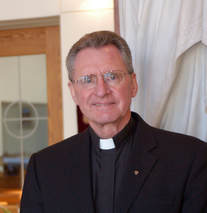
In, 2006, Msgr. James Farmer was appointed as Pastor. Upon his arrival, Msgr. Farmer soon found that a top priority was the condition of the lower church. He had the monumental task of overseeing the reconstruction and renovation of this space along with much needed repairs to the main church and other parish buildings, which required him to initiate a Capital Campaign. At the same time, he had to deal with Baltimore Country Traffic Division and the State Highway Administration, who needed parish propertry to widen Putty Hill Ave and Harford Rd. This endeavor entailed eliminating the circle in front of the main entrance to the church and building a new church entrance from Putty Hill Ave. When all of the work was completed, the lower church had been transformed into much needed meeting space and was rededicated by Archbishop O'Brien as the St. Ursula Spiritual Center. In August, 2010, Msgr. Farmer was appointed Pastor of St. John's Church in Westminster, MD while continuing at St. Ursula, until a replacement could be named. |
Fr. Hook Years
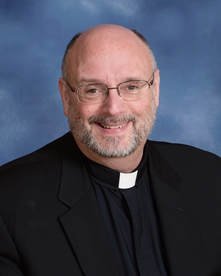
Fr. Steve Hook was appointed Pastor of St. Ursula in December, 2010 and began his time her in January, 2011. Fr. Steve began his tenure here with a clear direction from the parish to focus on building up the involvement of youth in the life of the parish. Fr. Steve spent many hours at St. Ursula School and worked with parish and school families in order to "reunite" the parish and school, which over the years had become two separately run institutions. During Fr. Steve's time, the parish has reached out to families and teens through the establishment of a Peer Ministry based Confirmation Program, a monthly Marriage Blessing, a monthly Youth Mass, a senior server program open to both boys and girls, regularly scheduled hospitality following weekend Masses, having the school children attend daily Mass once a week, and more recently the establishment of a parish youth band. During his time, Fr. Steve also oversaw a dramatic change in clergy presence at St. Ursula. During 2014, St. Ursula parish was saddened by having to deal with the passing of Fr. Gerry Hynes. C.P., (who assisted here and had been in residence here for the past 28 years), Deacon Frank Rongione (who was helping here for the past 27 years), and Deacon Bob Keenan (who had been assisting at St. Ursula, more or less, for the past 42 years). All three men began the year still assisting at Masses and with baptisms and other ministerial activities. It was a very difficult year for St. Ursula. Fr. Steve was reassigned to Our Lady of the Chesapeake at the end of 2017, with his last Mass at St. Ursula Parish being December 31, 2017. |
Fr. Jason Worley - Present
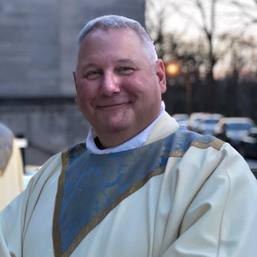
A native of St. Michael's in Overlea, Fr. Jason comes to us from St. Peter the Apostle in Libertytown. Fr. Jason was ordained in 1999 and has served at St. Mark's in Catonsville, Our Lady of Mount Carmel in Essex, and Our Lady Queen of Peace in Middle River. Fr. Jason strives to have an open dialog with his parishioners, and has said "a listening ear, and open heart, and a willingness to work with the people" is at the heart of every good parish. Fr. Jason is excited to start his journey at St. Ursula and we are very excited to have him!
A native of St. Michael's in Overlea, Fr. Jason comes to us from St. Peter the Apostle in Libertytown. Fr. Jason was ordained in 1999 and has served at St. Mark's in Catonsville, Our Lady of Mount Carmel in Essex, and Our Lady Queen of Peace in Middle River. Fr. Jason strives to have an open dialog with his parishioners, and has said "a listening ear, and open heart, and a willingness to work with the people" is at the heart of every good parish. Fr. Jason is excited to start his journey at St. Ursula and we are very excited to have him!